@pandatao.me Sichuan, Chengdu


Shanghai Travel Guide 2026 — Quick Answer
- Best time to visit: April–May & September–October
- Best way to get around: Metro (fastest, cheapest, most reliable)
- Where to stay: People’s Square, Jing’an, or French Concession
- Ideal trip length: 3–5 days
- Daily budget: 400–1000 RMB (excluding hotels)
- Book in advance: Museums, observation decks, Disneyland
- Must-do: See the skyline from both sides of the river
👉 Want a ready-to-use version with maps, routes, and food spots?
Download the full Shanghai Travel Guide (PDF)
How to Plan a Trip to Shanghai (What Most Guides Don’t Tell You)
Most travel guides focus on what to see.
Shanghai is different.
Here, planning is less about attractions—and more about how you move between them.
The city is massive, layered, and constantly shifting.
Two places that look close on a map can feel like completely different worlds.
👉 The biggest mistake:
Staying in Pudong for the skyline…
then spending your entire trip crossing the river to actually experience the city.
Where to Stay in Shanghai (By Travel Style)
Shanghai isn’t one center—it’s a collection of “micro-cities.”
French Concession & Jing’an (Best Overall)
- Tree-lined streets, walkable neighborhoods
- Cafés, boutiques, local life
- Ideal for first-time visitors
Local Reality Check:
The real charm isn’t on the main roads—it’s in the small side streets where daily life spills out.
People’s Square & Nanjing Road (Most Central)
- Easy access to major sights
- Great for short stays
Trade-off:
- Crowded
- Less local feeling
Pudong (Lujiazui) (Luxury & Skyline)
- Iconic views
- High-end hotels
But:
After 8 PM, it can feel strangely empty.
“In Pudong, you see the future.
In Puxi, you live the present.”
Hongkou & North Bund (Underrated)
- Fewer tourists
- Historic architecture
- More residential
Shanghai Itinerary: 3 to 5 Days
Day 1: The Shanghai You Expect (Done Right)
Morning: The Bund (外滩)
Start early.
When you arrive:
👉 Don’t look at Pudong
👉 Turn around
The real story is behind you:
- Colonial-era buildings
- Art Deco banks
- Layers of history
Midday: Nanjing East Road
Yes, it’s touristy—but important.
Focus on:
- Street food
- Old food halls
- The density of the city
👉 Try: shengjianbao (pan-fried soup buns)
Afternoon: Yu Garden & Old City
- Classical Chinese garden design
- Chaotic surrounding streets
Observed Detail:
A vendor quietly stirring pear syrup candy—
not selling to tourists, but to people who already know.
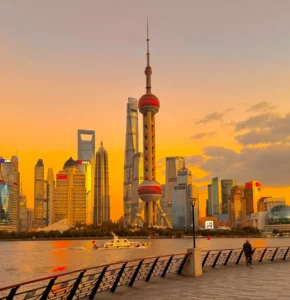
Evening: Pudong Skyline
See both views:
- From the Bund → past looking forward
- From Pudong → future looking back
👉 You need both to understand Shanghai.
Day 2: French Concession & Everyday Shanghai
This is where the city slows down.
Morning: Wukang Road
- Tree-lined streets
- Historic villas
👉 Skip the famous photo spot
The better version is always 50 meters away.
Midday: Anfu Road Area
- Cafés
- Boutiques
- People watching
👉 Best move:
Sit for an hour. Do nothing.
That is the experience.
Afternoon: Xintiandi & Sinan Mansions
- Restored shikumen houses
- Clean, curated spaces
Feels almost unreal—
but people actually live here.
Day 3: Choose Your Style
Option A: Shanghai Disneyland
- Full-day
- Best: early morning + late evening
Option B: Culture & Riverside (Recommended)
Morning: Shanghai Museum
Afternoon: Xuhui Riverside
- Locals walking
- Kids playing
- No agenda
👉 This is Shanghai breathing.
Optional Day 4–5 (Deeper Layer)
- Contemporary art districts (Power Station of Art, West Bund)
- Local markets
- Day trip to water towns
What to Eat in Shanghai (Food Guide)
Shanghai cuisine (本帮菜) is:
- Slightly sweet
- Soy-based
- Rich and comforting
Must-try dishes:
- Shengjianbao (pan-fried buns)
- Xiaolongbao (soup dumplings)
- Hongshao rou (braised pork)
Breakfast (Don’t Skip This)
The most authentic breakfast isn’t in a café.
It’s:
- A street stall
- At 7:30 AM
- Ordered without words
👉 Fast, cheap, unforgettable
Where to Eat
Avoid:
- Bund-facing restaurants
- Nanjing Road chains
Instead:
- Walk 10–15 minutes away
- Look for busy local spots
How to Get Around Shanghai
- Metro = best option
- 3–8 RMB per ride
- Covers the entire city
Use:
- Alipay / WeChat Pay
- Didi for late-night rides
Avoid:
- Rush hour taxis
- Long cross-city trips
Shanghai Travel Budget (Per Day)
- Budget: 250–400 RMB
- Mid-range: 400–800 RMB
- Premium: 800+ RMB
Best Time to Visit Shanghai
- Spring (Mar–May) → best
- Autumn (Sep–Nov) → clear skies
- Summer → hot & humid
- Winter → fewer crowds
Common Mistakes to Avoid
- Staying in Pudong for convenience
- Only eating in tourist zones
- Overpacking your itinerary
- Not using mobile payments
- Ignoring modern culture
High-Retention Insight
The most “real” Shanghai moment often isn’t planned.
It’s:
- A quiet alley
- A shared table
- A routine you weren’t meant to see
FAQ: Shanghai Travel Guide
How many days do you need?
3–5 days ideal
Is Shanghai easy to navigate?
Yes—especially with the metro
Do you need Mandarin?
Helpful, but not required
Final Thought
Shanghai is a city of contrasts:
- Old vs new
- Fast vs slow
- Global vs deeply local
At first, it feels chaotic.
Then, gradually, something shifts—
and the contradictions start to make sense.
That’s when Shanghai clicks.
👉 If you want a version of this guide you can actually use on the ground—
with maps, routes, and curated food spots:
Check out the full Shanghai Travel Guide (PDF)

Tao
Chris Lee (Tao) is the founder of PandaTao, a journal exploring China through its cities, tea, and traditional crafts. He shares stories of everyday culture — from quiet teahouses and local markets to the small rituals that shape daily life in China.
📬 Stay updated: Get insider tips, guides, and stories by email at pandatao.me@gmail.com