
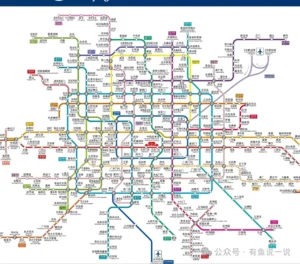
You’re staring at a spiderweb of 20+ colored lines on the station wall, your phone has no signal to load a map, and a crowd is building behind you at the ticket machine. Generic guides list every line, but you only need the three that connect 90% of the major sights. This article gives you that shortlist, the exact payment method that saves 15 minutes per day, and the single routing mistake that wastes an hour.
Most travelers overcomplicate the Beijing metro.
👉 You only need 3 lines: Line 1, Line 2, and Line 8
👉 Use Alipay QR — it works without a Chinese SIM
👉 Avoid taxis during rush hour — the metro is 2–3x faster
If you get these three things right, you can navigate 90% of Beijing without stress.
Now here’s how it actually works in real life:
👉 Forget the complex map. Focus on Lines 1, 2, and 8. Use Alipay’s “出行” (Travel) function for payment—it works without a local SIM or Chinese bank account.
Quick Answer
- 👉 DO use Alipay QR — fastest and works without local SIM
- 👉 DO NOT buy single tickets unless necessary (slow + easy to lose)
- 👉 If visiting main sights → ONLY use Lines 1, 2, and 8
- 👉 If it’s rush hour → DO NOT take taxis (can be 3x slower)
- 👉 If you have luggage → avoid metro during 7–9 AM / 5–7 PM
- 👉 If you only do one thing → download an offline metro map before arrival
Here’s a quick comparison of your core transit options:
| Name | Best For | Key Advantage | Price Range (per trip) | Honest Drawback |
|---|---|---|---|---|
| Metro (Alipay QR) | All sightseeing | Punctual, avoids traffic, connects all major sights. | ¥3–8 | Crowded at peak times; many stairs. |
| Taxi / Ride-hail | Late nights, groups of 3–4, with luggage | Door-to-door, no walking. | ¥25–80 within central city | Unpredictable traffic; surge pricing during peaks/rain. |
| Tourist Bus | Single-destination trips (e.g., Great Wall) | Direct to specific remote attractions. | ¥20–50 | Infrequent schedules; subject to road traffic. |
| Bicycle (Shared) | Short hops (<3km), hutongs | Perfect for exploring alleyways like Nanluoguxiang. | ¥1.5–3 per 30min | Geofenced; cannot park near Tiananmen. |
Who This Is For / NOT For
✓ Works well for: Travelers on a tight daily budget (under ¥50 for transport). Visitors who want to see 2–3 major sights in different parts of the city in one day. Anyone who values predictable travel time over comfort.
✗ NOT for: Families with very young children and no stroller during rush hour. Visitors with significant mobility challenges. Anyone needing to travel between 11 PM and 5 AM (most lines are closed).
What Should You Actually Use? (Fast Decision)
- 👉 If you are visiting 2–3 major sights in one day → use metro only
- 👉 If you are tired or traveling short distance (<2km) → take a taxi
- 👉 If you are traveling during rush hour → metro is your ONLY reliable option
- 👉 If you are traveling late night → use Didi (metro closes ~11:30 PM)
- 👉 If you want the simplest setup → metro + Alipay QR is enough for your entire trip
Your Decision: Which Transport to Use?
Friction Point: Beijing is vast. The wrong choice can turn a 30-minute trip into a 90-minute ordeal of traffic or confusing transfers.
- IF you are a first-time visitor hitting major sights like the Forbidden City, Temple of Heaven, and Olympic Park… THEN use the metro exclusively. It’s a foolproof network connecting these points.
- IF you are on a tight budget… THEN the metro is non-negotiable. A day of taxi rides will cost ¥200+; a metro day will be under ¥30.
- IF you have limited time (e.g., a layover or 48-hour visit)… THEN use the metro for long hops (hotel to sight) and taxis for the final 2km when you’re tired. The time savings are critical.
- IF you prefer premium comfort and are in a group of 3–4… THEN ride-hailing (Didi) can be cost-comparable to 4 metro tickets and is far more convenient, except during weekday peaks.
- IF you are visiting in peak season (July, August, October)… THEN the metro is your only reliable option. Surface traffic in these months is gridlocked.
- IF you are visiting in low season (January, February)… THEN you have more flexibility. Taxis are more available and affordable, but the metro is still faster for cross-city trips.
If you’re planning your days in advance, this Beijing 5-day itinerary shows exactly how to combine these metro routes into efficient daily plans.
The 3 Metro Lines You Actually Need (Forget the Rest)
Most guides list all 20+ lines. As a tourist, you will live on these three. They form a rough triangle covering the historic center, north-south axis, and key transfers.
Is Line 1 the Most Important for Tourists?
Line 1 is your east-west backbone through the imperial core — it runs from Tiananmen to the CBD. Key stations for you: Tiananmen East (Forbidden City, National Museum), Wangfujing (shopping street), Military Museum. The trains are older and crowds are intense at 8:30 AM heading into the city. HONEST TAKE: The carriages are narrow and get claustrophobically packed during rush hour. For most first-timers, Line 1 is essential for accessing Tiananmen Square, but avoid it between 7:45–9:15 AM on weekdays.
Should You Use Line 2 to Get Around?
Line 2 is the circular line that runs along the old city wall — it connects every major rail station and serves as the system’s primary transfer hub. Key stations: Jianguomen (transfer to Line 1), Yonghegong (Lama Temple), Gulou Dajie (Drum Tower, Houhai). It’s the most frequent line, with trains every 2–3 minutes. HONEST TAKE: Because it’s a loop, getting the direction wrong only costs you time, not a lost ticket. If you board the wrong train, just stay on—you’ll loop back. For efficient transfers and accessing the northern hutongs, Line 2 is the right call.
What Can You See on Line 8?
Line 8 is Beijing’s “tourist spine” — it runs south-north along the central axis, connecting over a dozen major attractions. Key stations: Qianmen (south end of Tiananmen), Wangfujing (again), Nanluoguxiang (alleyway), Shichahai (lakes), Olympic Park (Bird’s Nest, Water Cube). HONEST TAKE: The southern section (south of Qianmen) is new and less useful for classic tourism. Focus on the segment from Qianmen north to Olympic Park. For a logical, north-south sightseeing day, Line 8 is your best choice.
How to Pay: The Fastest Method (System Loophole)
The ticket machine queues are long, and single-journey tickets are a tiny plastic token you can easily lose. The system loophole is using a QR code from an app you likely already have.
👉 Alipay’s “出行” (Travel) function is the fastest method for foreign tourists. Open Alipay, search for “出行”, select “Beijing”, and activate the metro QR code. At the gate, open Alipay (even without internet), tap “出行”, and scan. It charges your connected card automatically. This beats “Yitongxing” or “Beijing Yikatong” apps which require a Chinese bank card for top-up.
- Single Journey Ticket: Buy at machine (cash/WeChat/Alipay). ¥3–8. Risk: Lose the token, pay a ¥50 fine.
- Municipal Transit Card: Buy at service window (¥20 deposit +充值). Get deposit back at specific stations. Best for: Long-term stays.
- Alipay/WeChat QR Code: As above. Best for: 95% of tourists. No deposit, no top-up.
Scene: At the ticket gate, regulars glide through with a phone tap. Tourists fumble with plastic tokens, trying to find the slot. The staff behind the glass don’t look up—they’ve seen it a thousand times. Have your QR code ready before you reach the gate.
Best Time to Ride — and When to Avoid It
Weekday Rush Hours (7:00–9:00, 17:00–19:00): Packed like sardines. Avoid if you have luggage or claustrophobia. Lines 1, 2, 10, and 13 are the worst. Who it suits: No one. Take a taxi only if your journey is against the flow (e.g., heading out of the city center at 8 AM).
Midday (10:00–16:00): Manageable crowds. The best time for tourists. Trains run every 4–7 minutes.
Evening (19:00–22:30): Busy but comfortable. Good for post-dinner travel.
Weekends: Crowded but more evenly spread throughout the day. No pronounced “rush hour”.
Time Arbitrage Insight: Entering a station at 8:45 AM takes 12–15 minutes from street to platform (security + ticketing + walking). Entering at 9:15 AM takes 4–6 minutes. That 30-minute delay saves you 8–9 minutes of stressful queueing.
Station-by-Station Guide: Exit Here for These Sights
Don’t just get off at the right station—get out at the correct exit. A wrong exit can mean a 15-minute unnecessary walk.
- Forbidden City & Tiananmen Square: ✅ Line 1, Tiananmen East, Exit B. This is the closest. ✘ Avoid Tiananmen West; it involves a long underground passage and extra security.
- National Museum: ✅ Line 1, Tiananmen East, Exit D. Directly opposite the museum’s north entrance.
- Wangfujing Shopping Street: ✅ Line 1, Wangfujing, Exit C. 3-minute walk to the pedestrian street.
- Lama Temple (Yonghegong): ✅ Line 2/5, Yonghegong, Exit C (Southwest). 2-minute walk to the ticket office.
- Drum Tower (Gulou) & Houhai Lakes: ✅ Line 8, Shichahai, Exit A2. 8-minute walk to the Drum Tower, then into the lakeside alleys.
- Nanluoguxiang: ✅ Line 6/8, Nanluoguxiang, Exit E. You are at the south gate of the alley. Overrated: The main alley is a crowded souvenir gauntlet. Walk 5 minutes west into Beiluoguxiang for quiet cafes.
- Olympic Park (Bird’s Nest): ✅ Line 8, Olympic Park, Exit D (Southeast). 5-minute walk to the Bird’s Nest plaza.
- Summer Palace: ✅ Line 4, Beigongmen, Exit D. This is the North Palace Gate. 👉 Best for starting at the top and walking downhill through the park.
- Temple of Heaven: ✅ Line 5, Tiantan Dongmen, Exit A (East Gate). The East Gate has the shortest ticket queue.
Practical Info Block: Key Stations
- Tiananmen East (Line 1): ADDRESS: Dongcheng District, East Chang’an Ave. TRANSPORT: Line 1, Exit B. 5-min walk to Forbidden City entrance. PRICE: Metro ¥3–5. HOURS: Station open 5:10–23:30. BOOKING: N/A.
- Yonghegong (Lines 2/5): ADDRESS: Dongcheng District, Yonghegong St. TRANSPORT: Line 2/5, Exit C. 2-min walk. PRICE: Metro ¥3–5; Temple entry ¥25. HOURS: Station open 5:20–23:20. BOOKING: Temple tickets on-site or via WeChat.
- Olympic Park (Line 8): ADDRESS: Chaoyang District, Olympic Park. TRANSPORT: Line 8, Exit D. 5-min walk. PRICE: Metro ¥5; Bird’s Nest entry ¥50. HOURS: Station open 5:05–23:35. BOOKING: Park free; stadium tickets via Meituan/Dianping.
If you’re unsure how to connect these lines into a real travel plan, follow this step-by-step Beijing itinerary instead of guessing.
What Most Guides Won't Tell You
❌ Mistake: Using Google Maps for real-time metro navigation. It’s unreliable and often blocked.
✅ Correct: Use Amap (高德地图) or Baidu Maps (百度地图). Download them before you arrive. They have accurate, real-time metro routing, exit details, and even crowd predictions.
❌ Mistake: Thinking “one ticket” lets you ride all day. You have a 4-hour time limit per journey.
✅ Correct: Once you enter the paid area, you must exit within 4 hours. Exceed that, and you’ll pay a maximum fare (approx. ¥10) at the service desk.
The “Weak-Strong” Air-Con Carriage: On newer trains (Lines 6, 7, 8, 14), the ends of the train have “强冷” (Strong Cold) carriages, the middle has “弱冷” (Weak Cold). If you’re sensitive to cold, head to the middle cars.
The Seat-Snag Trick (Time Arbitrage): On lines that start at a major terminus (e.g., Line 1 at Sihui), boarding at the terminus guarantees a seat. If you’re staying near the end of a line, travel away from the city center in the morning to get a seat, then ride back in comfort.
FAQ: Beijing Metro Travel
How long does a typical metro journey take?
Crossing central Beijing (e.g., Temple of Heaven to Olympic Park) takes 45–55 minutes including transfers and walking. Short hops (2–3 stops) take 10–15 minutes door-to-door.
Is the metro worth it with only 2 hours to see a sight?
Yes, if the alternative is a taxi in uncertain traffic. For a short visit to a single landmark like the Drum Tower, a taxi might be door-to-door faster, but the metro is guaranteed. For a 2-hour window, choose one sight close to a metro station.
Morning vs. afternoon for metro travel?
Afternoon (after 1 PM) is significantly less crowded than morning (before 10 AM). The metro is most pleasant between 10 AM and 4 PM on weekdays.
Can I take the metro from the airport?
Yes. Capital Airport (PEK): Take the Airport Express line (¥25) to Dongzhimen (transfer to Line 2/13). Daxing Airport (PKX): Take the Daxing Airport Express (¥35) to Caoqiao (transfer to Line 10). For groups of 3+ or with lots of luggage, a taxi/ride-hail is often more cost-effective.
How do I find the right exit?
Look at the street maps on the platform walls before you ascend. They show all exits (A, B, C, D) and the major landmarks in each direction. If in doubt, Exit A or B typically face north/south or east/west main roads.
Is the metro safe at night?
Extremely safe. Stations and trains are well-lit and have staff until closing (around 11:30 PM). The main concern is missing the last train, as taxis become scarce and expensive post-midnight.
What about luggage?
Avoid rush hour with large suitcases. Stations have stairs; not all have elevators or escalators. For airport trips with bags, consider the Airport Express or a taxi.
Questions You Might Still Have
The east gate of the Forbidden City (Meridian Gate) is a 12-minute walk from Tiananmen East Exit B — follow the crowd and signs along the moat. Most visitors queue at the main southern entrance; tour groups often use the east gate.
Tickets for major attractions like the Forbidden City release at 8:00 PM Beijing time, 7 days in advance — set a calendar alarm. The official WeChat mini-program is the only reliable booking channel for foreigners.
A weekday 3 PM taxi from the Summer Palace to downtown costs ¥65–80 and takes 50–70 minutes — the metro from Xiyuan station takes 55 minutes for ¥6. The price/time difference is negligible, but the metro is predictable.
Local Truth: Skip the Tourist Traps, Find the Real Routes
Most visitors cram onto the main alley of Nanluoguxiang. This is a mistake. The parallel Beiluoguxiang and the surrounding Mao’er Hutong have authentic cafes, bookshops, and quiet courtyard homes. The difference is 70% fewer people and prices that aren’t inflated for tourists.
The standard tourist route on Line 8 goes from south to north. Reverse it. Start at Olympic Park in the morning when it’s quiet, work your way south to Shichahai for lunch, and finish at Nanluoguxiang in the late afternoon. You’ll move against the typical tourist flow.
Witness: At Dongzhimen transfer hall during evening rush, a river of people moves with a quiet, determined efficiency. No one talks. Eyes are fixed on phones or the middle distance. The only sound is the shuffle of feet and the distant rumble of trains. It feels less like travel and more like a daily, practiced ritual.
Navigating Beijing’s scale is about choosing the right tool for each segment of your day. The metro is that tool for 80% of your movements. For the other 20%—when you’re tired, it’s late, or you’re lost in a hutong—a Didi is a tap away.
For a plan that sequences these metro trips into efficient, sensible days—saving most visitors 2–3 hours of logistical headache—use the PandaTao Beijing Field Guide. It turns this network into a step-by-step advantage.
Most travelers still get stuck on:
– how to combine metro routes into efficient daily plans
– which order to visit sights without backtracking
– when to switch between metro and taxi
👉 That’s exactly what the PandaTao Beijing Field Guide solves — turning this system into a step-by-step daily plan.