
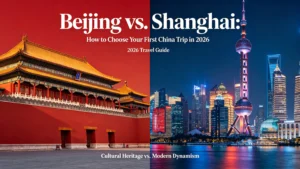
Choosing your first city in China feels like a high-stakes gamble. You’re overloaded with conflicting advice, unsure if you should chase ancient history or dive into a futuristic metropolis. One wrong pick could define your entire trip. This guide solves that. It’s not an article—it’s a decision engine. We’ll compare Beijing and Shanghai across every practical dimension a first-timer cares about. If you’re still unsure after reading, we’ve failed. For most first-time visitors with one week or less, the clear recommendation is Beijing. It delivers the iconic, “textbook China” experience you’re likely seeking.
Quick Answer:
- Best choice for a classic first impression: Beijing.
- Time needed per city: 4 full days for Beijing, 3 full days for Shanghai.
- What to avoid: Trying to do both in under 5 days—you’ll see nothing properly.
- Skip Beijing if: Your primary goal is luxury shopping, international dining, and a seamless, low-friction Western-style urban experience.
- Skip Shanghai if: You have a deep aversion to dense crowds and modern skyscrapers, and crave only ancient sites.
- Default safest choice: Beijing. It contains the non-negotiable symbols (Great Wall, Forbidden City) that define a first trip to China.
Here’s a quick comparison:
| Dimension | Beijing | Shanghai |
|---|---|---|
| Best For | History buffs, iconic photography, “must-see” checklist travelers. | Urban explorers, foodies, shoppers, those wary of culture shock. |
| Key Advantage | Unmatched concentration of world-class historical monuments. | Seamless modernity, unparalleled convenience, and vibrant 24/7 energy. |
| Price Range (Mid-range) | ¥600–900/day (Attractions are spread out, requiring more transport/tours). | ¥700–1000/day (Accommodation & dining can be pricier, but many sights are free). |
| Honest Drawback | Logistics are harder. Sites are vast and distant. English levels are lower. | It feels less uniquely “Chinese.” You could have a similar urban experience in other global capitals. |
Who This Is For / NOT For
✓ Works well for: Travelers who want to tick off the Great Wall and Forbidden City; those fascinated by imperial history and grand-scale architecture; visitors who don’t mind a logistical challenge for a bigger payoff.
✗ NOT for: Travelers who prioritize culinary variety and international dining over local cuisine; those who want a trip focused on relaxation, boutique shopping, and nightlife; anyone with severe mobility issues (Beijing requires far more walking).
The Core Experience: What You’re Actually Signing Up For
Beijing: The Imperial Capital
Beijing is about weight, scale, and history you can touch. The experience is defined by monumental sites. The Forbidden City’s 720,000 sq meters demand 3–4 hours of walking. The Great Wall at Mutianyu requires a 1.5-hour drive each way. This isn’t a casual city stroll; it’s a deliberate pilgrimage to the physical heart of Chinese civilization. Between sites, you’ll navigate hutongs (ancient alleys) where life plays out in courtyard homes, a stark contrast to the imperial grandeur.
HONEST TAKE: The scale is exhausting. A “must-see” day often involves 8–10 km of walking and 2–3 hours in a car. If your travel style is slow and leisurely, Beijing will test you.
Verdict: For first-timers seeking the postcard China, this is the raw, authentic, and demanding experience you need.
Shanghai: The Future Metropolis
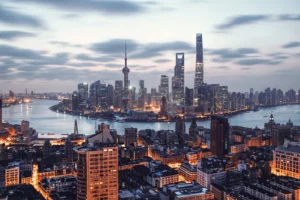
Shanghai is about verticality, velocity, and cosmopolitan fusion. The experience is curated and convenient. You’ll gaze at the Huangpu River, with colonial Bund on one side and sci-fi Pudong skyscrapers on the other. You’ll explore gentrified lanes (like Anfu Road) packed with cafes and boutiques. The city is built for consumption—of food, fashion, and views. It’s dazzling, comfortable, and can feel surprisingly familiar to visitors from other major global cities.
HONEST TAKE: The “old Shanghai” pockets (Yuyuan Garden, Zhujiajiao water town) feel like preserved exhibits amidst the glass and steel. You must seek out history; in Beijing, it surrounds you.
Verdict: For first-timers who value ease, variety, and a spectacular modern urban landscape, Shanghai delivers without the physical toll.
Decision Section: If → Then
The Friction Point: This choice is hard because both cities are superb, but they offer fundamentally different versions of “China.” Picking one feels like you’re missing out on the other.
- IF this is your first and possibly only trip to China, and you want the definitive iconic experience → THEN choose Beijing. You cannot replicate the Great Wall anywhere else.
- IF you have under 5 full days and hate feeling rushed → THEN choose Shanghai. Its highlights are more geographically concentrated and easier to enjoy at a quicker pace.
- IF you are a food-focused traveler who values immense variety, from street food to world-class fine dining → THEN choose Shanghai. Its culinary scene is more diverse and internationally accessible.
- IF you travel with young children or elderly companions → THEN choose Shanghai. The logistics are easier, parks are more accessible, and there are more familiar comforts (like Disneyland).
- IF you plan a longer trip (10+ days) and can combine two cities → THEN start in Beijing for 4 days, then take the 4.5-hour high-speed train to Shanghai for 3 days. This classic combo covers the traditional-modern spectrum perfectly.
Practical Info Block: Logistics at a Glance
Beijing
- KEY SITES: Forbidden City (故宫), Mutianyu Great Wall (慕田峪长城), Temple of Heaven (天坛), Summer Palace (颐和园).
- TRANSPORT TO SITES: Forbidden City/Tiananmen: Metro Line 1 to Tiananmen East, Exit B. Mutianyu Great Wall: No direct metro. Book a private car (¥500-700 round-trip) or join a tour bus (¥200-300/person). 1.5-hour drive.
- PRICE: Forbidden City ticket: ¥60 (Apr-Oct), ¥40 (Nov-Mar). Mutianyu Combo Ticket (cable car + entry): ¥180.
- HOURS: Forbidden City: 8:30am–5:00pm (Apr-Oct), 8:30am–4:30pm (Nov-Mar). Closed Mondays.
- BOOKING: Forbidden City tickets sell out 3-7 days in advance. Book exactly at 8:00pm Beijing time on the official WeChat mini-program “故宫博物院.” Set an alarm.
Shanghai
- KEY SITES: The Bund (外滩), Pudong Skyscrapers (Lujiazui 陆家嘴), Yuyuan Garden (豫园), French Concession.
- TRANSPORT TO SITES: The Bund: Metro Line 2 or 10 to East Nanjing Road, Exit 7. 5-min walk. Pudong (Shanghai Tower): Metro Line 2 to Lujiazui, Exit 4.
- PRICE: Yuyuan Garden: ¥40. Shanghai Tower Observatory: ¥180.
- HOURS: The Bund: 24/7 (lights off at 11pm). Yuyuan Garden: 8:45am–4:45pm.
- BOOKING: Major attractions rarely sell out. Book observatory tickets on Meituan or Ctrip day-of for a slight discount.
Best Time to Visit — and When to Avoid It
- Spring (April-May) & Autumn (Sept-Oct): Best for both. Pleasant temps (15-25°C), clear skies. Crowds are high, especially during national holidays (first week of May, Oct).
- Summer (June-August): Avoid Beijing if possible. Hot (over 30°C) and humid. Shanghai is also hot but more bearable with indoor escapes. Afternoon thunderstorms are common.
- Winter (Dec-Feb): Best for deals and fewer crowds. Beijing is cold (often below 0°C) but seeing the Great Wall with possible snow is magical. Shanghai is chilly and damp. Many attractions have shorter hours.
- TIME ARBITRAGE: Visit the Forbidden City on a Tuesday or Wednesday. Monday closures push weekend crowds to these days, but they’re still 30% quieter than Saturdays.
FAQ
1. Is one city more foreigner-friendly than the other?
Yes. Shanghai is significantly more foreigner-friendly — English is more widely spoken in service areas, signs are better, and the city’s systems (metro, payment) feel more familiar. Beijing requires more patience and preparation.
2. How long does it take to travel between them?
The high-speed train (G-series) is the best way. It takes 4.5 to 5.5 hours between city centers. Over 30 departures daily from Beijing South to Shanghai Hongqiao Station. Book tickets 1-2 weeks in advance on Trip.com.
3. Which is better for food?
It depends on your palate. Beijing is for iconic, hearty dishes: Peking Duck, Zhajiangmian noodles. Shanghai offers greater diversity: delicate soup dumplings (Xiaolongbao), international cuisine, and a world-class café scene. For adventurous eaters, Beijing wins. For variety, Shanghai wins.
4. Is Shanghai just a modern city with no history?
No, but you must look for it. The French Concession’s architecture and the Yuyuan Garden district offer historical texture, but it’s largely a 19th/20th-century history compared to Beijing’s millennia-old imperial legacy.
5. Can I see the Great Wall on a day trip from Shanghai?
No. This is a common misconception. The Great Wall is over 1,200 km from Shanghai. A day trip is physically impossible. You must go to Beijing.
Human Truth
The overrated thing: The “hutongs” around Nanluoguxiang in Beijing. They appear on every list as “authentic,” but the main lanes are a crowded souvenir bazaar. For the real atmosphere, walk two blocks east into the unnamed alleys where residents actually live.
The local behaviour: In Shanghai, locals rarely go to the Bund on weekends—it’s for tourists. They take their weekend walks along the West Bund (Xuhui Riverside) for open spaces and art galleries.
The tourist mistake: Trying to visit the Forbidden City and the Great Wall on the same day. It’s a surefire way to spend 8 hours in transit and be too exhausted to appreciate either. They are separate, full-day commitments.
What Most Guides Won't Tell You
❌ Mistake: Going to the Mutianyu Great Wall main entrance at 9am. You’ll queue for 45+ minutes for the cable car.
✅ Alternative: Enter through the less-known “Northern Cable Car” station (a 5-minute shuttle ride from the main lot). Queues are typically 70% shorter. Tell your driver “去北缆车” (qù běi lǎnchē).
❌ Mistake: Thinking the Bund view is best from the Bund. The iconic photo of the Bund with Pudong is taken from across the river in Pudong. Go to the Binjiang Promenade in Lujiazui at dusk.
✅ System Loophole: Forbidden City tickets “sell out” online, but a limited number of same-day paper tickets are sometimes available at the “Ticket Office for Comprehensive Service Window” near the Meridian Gate (Wu Men), primarily for seniors and children. If you’re desperate, arrive at 7:30am and politely inquire—it’s not guaranteed, but it works about 30% of the time.
What to Do Next
- Chose Beijing? → Plan your days with our [Beijing 5-Day Itinerary: The Essential Route].
- Chose Shanghai? → Optimize your time with our [Shanghai 3-Day Itinerary: Modern & Traditional].
- Still planning your full trip? → See how these cities fit into a broader [China 2-Week Itinerary for First-Timers].
- Want a done-for-you plan with exact timings, metro exits, and booking scripts? → Get the PandaTao Field Guide. It saves most visitors 2–3 hours of logistical hassle on the day and includes offline maps and vendor negotiation phrases you won’t find here.