
Beijing Hutong Walking Guide — Quick Answer
- Best first-time route: Yonghegong → Wudaoying
- Most authentic area: Dongsi hutongs
- Best for views & evening vibe: Shichahai
- Best hidden route: Xisi & White Dagoba
- Time needed: 2–4 hours per route
👉 A hutong walk is one of the easiest and most rewarding experiences in Beijing—free, flexible, and deeply local.
Introduction
Beijing’s hutongs aren’t just old alleys—they’re where the city still lives.
Behind grey brick walls, you’ll find courtyard homes, hidden cafés, morning markets, and quiet lanes that feel worlds away from the Forbidden City crowds.
This guide gives you 5 walkable hutong routes, plus exactly how to explore them like a local—without getting lost or wasting time.
Which Hutong Route Should You Choose?
- Short on time: Yonghegong → Wudaoying
- Want real local life: Dongsi hutongs
- Looking for cafés & creative vibe: Wudaoying / Beiluoguxiang
- Want classic Beijing views: Shichahai
- Prefer quiet & less touristy: Xisi area
Best Hutong Walking Routes in Beijing (Quick Comparison)
| Route | Best For | Vibe | Time Needed |
|---|---|---|---|
| Yonghegong → Wudaoying | First-time visitors | Balanced | 2–3 hours |
| Drum Tower & Shichahai | Scenic views | Classic Beijing | 2–3 hours |
| Dongsi Hutongs | Local life | Authentic | 2–3 hours |
| Qianmen Hutongs | Culture + history | Mixed old & new | 2–3 hours |
| Xisi & White Dagoba | Quiet exploration | Underrated | 2–3 hours |
How to Get to Beijing Hutongs (Subway, Bike & Walking Tips)
The beauty of Beijing’s hutong network is its accessibility via the superb subway system. Nearly every worthwhile walking route begins within a 10-minute walk of a station.
By Subway: This is your primary tool. Key lines are:
- Line 2: For Yonghegong (Exit G for Wudaoying Hutong), Andingmen (for Beiluoguxiang), Qianmen (Exit C for Yangmeizhu Xiejie, Xishiku), and Chongwenmen (Exit E for Dongjiaominxiang).
- Line 5: Connects at Yonghegong and Beixinqiao (for Dongsi area).
- Line 8: Shichahai (Exit A2) or Gulou Dajie for the Bell & Drum Tower area.
- Line 4: Xisi (for Brick Pagoda Hutong) and Caishikou (Exit G for Lannan Hutong).
By Bike: For covering ground between hutong clusters, use the ubiquitous blue Meituan or yellow Hello shared bikes. Scan with WeChat or Alipay. Crucial local tip: Avoid cycling within the narrowest hutongs during peak hours (8-9 am, 5-6 pm) when they are filled with delivery scooters and residents. On Foot: This is the only way to truly experience the hutongs. Wear comfortable walking shoes—the ground can be uneven. Best Time to Go: Weekdays are always quieter than weekends. Mornings (before 10 am) see locals going about their day, while late afternoons offer beautiful light. Some museums, like the Dongsi Hutong Museum, are closed on Mondays.
Route 1: Yonghegong → Wudaoying (Best First-Time Hutong Walk)
This route perfectly balances history and modern Beijing.
Start at Yonghegong (Lama Temple) and walk through Chengxian Street toward the Confucius Temple and Imperial College.
Then transition into Wudaoying Hutong—where traditional alleys meet cafés, boutique shops, and a relaxed creative vibe.
👉 Local tip: Skip the main street crowds—side alleys nearby are quieter and more authentic.
Route 2: Drum Tower & Shichahai (Classic Views + Best Evening Atmosphere)
This is the most iconic hutong experience.
Climb the Drum Tower for panoramic views, then explore the hutongs leading to Shichahai lakes.
👉 Local tip: Avoid the main lakeside bars—walk into nearby alleys like Beiluoguxiang for better cafés and atmosphere.
At sunset, the lakes reflect lantern lights—one of the most atmospheric scenes in Beijing.
Route 3: Dongsi Hutongs (Best for Local Life & Courtyard Architecture)
Dongsi is where you see real hutong life.
Walk through Dongsi Santiao and Sitiao, where traditional courtyard houses still function as living communities.
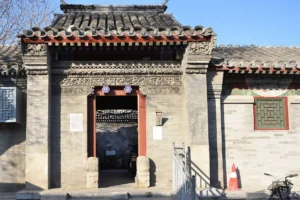
Visit the Dongsi Hutong Museum to understand siheyuan layout and gate structures.
👉 Local tip: Pay attention to gate designs—they reveal social status in traditional Beijing society.
Route 4: Qianmen Hutongs (Historic Streets & Hidden Cafés)
South of Tiananmen, the hutongs feel completely different.
Explore Yangmeizhu Xiejie, then move toward quieter cultural streets and hidden cafés.
Continue to Dongjiaominxiang—Beijing’s former Legation Quarter with Western-style buildings.
👉 Local tip: The best photo spots are in side alleys, not the main streets.
Route 5: Xisi & White Dagoba (Underrated, Quiet & Architectural)
If you want something less touristy, this is the best route.
Start at Xisi and explore Brick Pagoda Hutong, one of the oldest hutongs in Beijing.
Continue toward Miaoying Temple, where the White Dagoba rises above low hutong rooftops.
👉 Local insight: Walk behind the temple for better views framed by hutong alleys.
This area feels calmer, more residential, and far less curated than central hutongs.
How to Explore Beijing Hutongs Like a Local
- Walk instead of rushing
- Respect private homes
- Avoid midday crowds
- Use Apple Maps (Google Maps is unreliable)
- Bring small cash for local shops
Where to Eat in Beijing Hutongs (Local Restaurants, Cafes & Hidden Spots)
Forget generic tourist menus. Seek out these specific spots for authentic flavors and atmosphere.
- Wudaoying Hutong: He Kitchen & Co offers reliable Yunnan fusion in a stylish setting (dishes 40-80 RMB). For coffee, Barista is a staple.
- Dongsi Area: After your walk, the Yuanyi Yizhan (Horticulture Station) at the end of Dongsi Liutiao is a perfect rest stop—a café filled with plants, where you can sit under blooming trumpet vines.
- Qianmen Area: For a truly unique experience, book lunch at the 茶餐厅 (Tea Restaurant) inside the Mei Lanfang Former Residence on Tieshu Xiejie. The “Taizhou Mei-style Set” with crab roe noodles is around 100 RMB, and the courtyard setting is magical. Nearby, FIVE SPACE often hosts intriguing art and design exhibitions.
Shichahai: Avoid the lakeside tourist traps. Dive into Baochao Hutong for local favorites like Huguo Temple Snacks for lüdagunr (glutinous rice rolls) and wandouhuang* (pea cake).If you’re continuing your day after the palace, our Beijing food guide has better local spots just a short walk or metro ride away.
Beijing Hutong Walking Tips (What to Know Before You Go)
- Respect Privacy: These are living communities. Don’t peer into windows or enter courtyards marked as private. Photography should be discreet.
- Navigate Smartly: Google Maps is unreliable. Use Baidu Maps or Apple Maps (which uses Gaode data in China) for accurate walking directions in the maze-like alleys.
- Cash is Still King: While WeChat Pay and Alipay are ubiquitous, some tiny family-run stalls or older residents in museum ticket booths may prefer cash, especially for small sums under 20 RMB.
- Comfort is Key: The walking is constant and surfaces are uneven. Absolutely wear your most comfortable shoes and carry water.
- Seek the Side Alley: If a street like Nanluoguxiang feels overwhelmingly crowded, remember that its true charm is always one parallel alleyway over, where the noise fades and real life continues.
FAQs About Beijing Hutong Walking
Are hutongs worth visiting?
Yes—hutongs show the real life of Beijing beyond major attractions.
Which hutong route is best for first-time visitors?
Yonghegong to Wudaoying is the easiest and most balanced route.
How long should you spend?
2–4 hours per route is ideal.
Are hutongs free?
Yes, most are free to explore.
Is it safe to walk at night?
Yes, central hutongs are generally safe and well-lit.
The hutongs teach a simple, profound lesson about Beijing: that grandeur and intimacy exist side-by-side, that a city can be both imperial capital and a network of neighborly villages. To walk them is to trace the lines on the city’s palm. For more on the life within these walls, explore our guide to Beijing’s Courtyard Houses.