
Chengdu Tea Culture (Quick Guide for First-Time Visitors)
- Chengdu teahouses are social spaces, not just places to drink tea
- The gaiwan (盖碗) is the essential tool for drinking
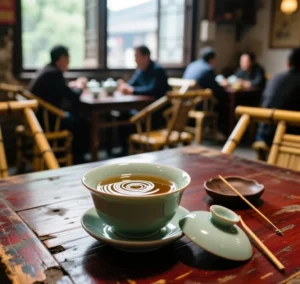
- Locals “pao chaguan” (泡茶馆) — meaning to spend hours soaking in the space
- Tea costs as little as 10–15 RMB with unlimited hot water refills
- Teahouses function as public living rooms, open to everyone
- The experience is about time, not tea quality
What Is a Gaiwan (And How to Use It in Chengdu)
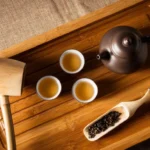
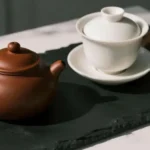
A gaiwan (盖碗) is a three-piece tea bowl:
- Lid (heaven)
- Bowl (human)
- Saucer (earth)
But in Chengdu, it’s more than symbolism — it’s a functional, social tool.
👉 It lets you:
- control strength
- keep leaves out
- signal intention without speaking
If you’re new, read this first:
👉 How to Drink Tea in a Chengdu Teahouse: A Gaiwan Guide
How Tea Culture Works in Chengdu (Beyond Just Drinking Tea)
Forget formal tea ceremonies. Chengdu tea culture is loud, social, and practical.
Historically:
- Tap water was undrinkable
- People relied on teahouses for boiled water
That necessity evolved into something deeper:
👉 Chengdu teahouse became:
- an office
- a meeting room
- a social network
- a daily ritual
Local Reality Check:
This is not idleness. Deals happen here. Relationships are maintained here.
This is productive stillness.
What a Typical Tea Ritual Looks Like in Chengdu
In places like Pengzhen’s old teahouses, the rhythm is precise:
- Regulars arrive before sunrise
- No greetings — just привычный seating
- Tea is placed without asking
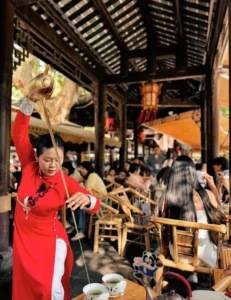
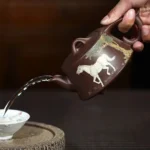
- A long-spout kettle arcs boiling water from a distance
No performance. No explanation.
Just repetition.
👉 This is what you’re observing:
routine as culture
Gaiwan Etiquette Explained (How Locals Communicate Without Words)
In Chengdu, the gaiwan replaces conversation.
- Lid tilted → refill please
- Lid off → I’ll be back
- Lid closed → I’m done
No one explains this.
Everyone understands it.
👉 Want the full breakdown?
Read: Chengdu Tea Etiquette: What Locals Actually Do
How Much Tea Costs in Chengdu (Simple Price Guide)
| Type | Price | What You Get |
|---|---|---|
| Local Teahouse | 10–20 RMB | Tea + unlimited hot water |
| Park Teahouse | 30–60 RMB | Location + atmosphere |
| Modern Tea Space | 50–80 RMB | Design + curated tea |
Not all teahouses are the same — and where you go defines your experience.
1. Iconic Experience (First-Time Visitors)
He Ming Teahouse (People’s Park)
- Classic bamboo chair sea
- Ear cleaning, mahjong, long-spout kettles
- 30–60 RMB
👉 Best for: first exposure
2. Time-Capsule Teahouse
Guanyinge Old Teahouse (Pengzhen)
- Dirt floor, coal stove, no redesign
- Mostly elderly regulars
- ~10–15 RMB
👉 Best for: authenticity
3. Local Community Teahouses
Hidden neighborhood spots like Jinqin Teahouse:
- Loud, unfiltered, everyday life
- Delivery drivers, retirees, workers
- 10–20 RMB
👉 Best for: real Chengdu
4. Modern Tea Spaces
Places like:
- Jihuo Tea Space
- Natural Record Leafroom
- Minimalist design
- younger crowd
- 50–80 RMB
👉 Best for: curated experience
👉 Want a full breakdown with locations & travel tips?
Read: The 10 Best Teahouses in Chengdu (Local Guide)
✔ You pay once
✔ You stay as long as you want
What Tea to Order in Chengdu (Beginner-Friendly Choices)
Don’t overthink it.
Start with:
- Jasmine tea (花茶 / hua cha)
- Bitan Piaoxue
- Zhuyeqing (green tea)
👉 These teas are:
- cheap
- durable (multiple refills)
- what locals actually drink
👉 Full guide here:
What Tea to Order in Chengdu Teahouses
How Long to Spend Drinking Tea in Chengdu
This is where most visitors get it wrong.
- 30 minutes → tourist
- 2 hours → experience
- half a day → understanding
The practice is called:
👉 pao chaguan (泡茶馆)
→ to steep yourself in the teahouse
Common Mistakes First-Time Visitors Make with Tea in Chengdu
1. Ordering expensive tea
Locals drink the cheapest option.
2. Leaving too quickly
The value is in time, not tea.
3. Acting too formal
This is a social space, not a ceremony.
4. Ignoring the environment
The experience is everything happening around you.
A Small Detail That Explains Chengdu Tea Culture
In a neighborhood teahouse:
An old man cleans his hearing aid slowly.
His friend refills his gaiwan without looking up.
No conversation. No eye contact.
Just habit.
👉 This is what Chengdu tea culture really is:
unspoken continuity
Want to Go Deeper? (Tea Culture Guide & Routes)
If you want to go beyond random visits:
👉 Download: Chengdu Teahouse Experience Guide (Free PDF)
Inside:
- 5 real teahouse routes
- what to order (cheat sheet)
- etiquette in 1 page
- how to avoid tourist traps
Why Tea Culture Defines Chengdu
You’re not just drinking tea.
You’re stepping into a system where:
- time is slow
- space is shared
- nothing is rushed
Chengdu’s teahouses are not about tea.They are about how life should feel.
Chengdu Tea Culture FAQ (Cost, Etiquette & Basics)
What is the most famous teahouse in Chengdu?
He Ming Teahouse in People’s Park is the most iconic and beginner-friendly.
How much does tea cost in Chengdu?
10–60 RMB depending on location. All include unlimited refills.
Do I need to speak Chinese?
No. Ordering is simple and visual.
Can I stay for hours?
Yes — that’s the entire point.
What tea should I try first?
Jasmine tea (hua cha) — cheap, local, and perfect for long stays.