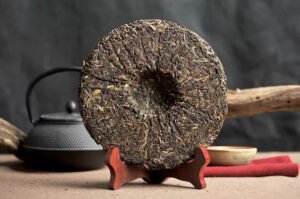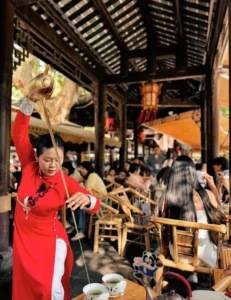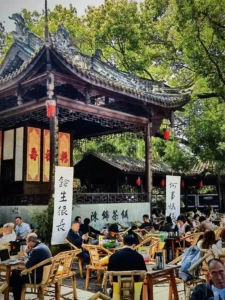

I remember my first trip to a Kunming tea market. I pointed at a dark, compressed cake and asked the shop owner how old it was. “Three years,” she said. I was confused — I’d been told Pu-erh gets darker with age. Then she pointed to the cake next to it, which looked almost green. “That one is 15 years old.”
That’s when I learned the first rule of Pu-erh: raw and ripe are not the same tea at different ages. They are fundamentally different products.
Quick answer:
- Raw (sheng) Pu-erh — natural fermentation, takes decades to mellow. Fresh taste, strong caffeine, bitter then sweet. For people who want complexity and are willing to wait.
- Ripe (shou) Pu-erh — artificial fermentation (wo dui), drinkable immediately. Smooth, sweet, almost no bitterness. For people who want a gentle daily tea.
- Default safest choice for new drinkers: Ripe Pu-erh. It’s forgiving, easy to brew, and won’t upset your stomach.
- Skip raw if: You have a sensitive stomach, drink tea on an empty stomach, or want something for evening.
- Skip ripe if: You dislike earthy flavors or want a tea that changes dramatically over years.
What Actually Makes Them Different? (It's Not Age)
The single most important thing to understand: raw Pu-erh will never become ripe Pu-erh.
No matter how long you store it — 10 years, 30 years, 50 years — a raw cake will always be raw. It will mellow. It will darken. But it will never develop the thick, earthy sweetness of a ripe tea.
Why? Because they take completely different paths from the same starting point.
Both start as shai qing mao cha (晒青毛茶) — sun-dried green tea made from Yunnan large-leaf varietal. The leaves are picked, withered, pan-fried to kill enzymes, rolled, and dried in the sun.
After this point, they split:
Raw Pu-erh goes straight to pressing. The tea is steamed and compressed into cakes, bricks, or nests. That’s it. From here, it ages naturally — slowly oxidizing, slowly fermenting through whatever microbes live in its storage environment. This process takes decades to fully transform the tea.
Ripe Pu-erh goes through wo dui (渥堆) — a controlled fermentation invented in 1973. The tea is piled up, sprayed with water, and covered. Over 45–60 days, the pile heats up to 50–65°C. Microorganisms break down the tea’s compounds, converting harsh catechins into smoother substances. The result: a tea that tastes like it’s been aged 20–30 years, in just two months.
This is not “fake aging.” It’s a different product category, with a different chemical profile, different taste, and different purpose.
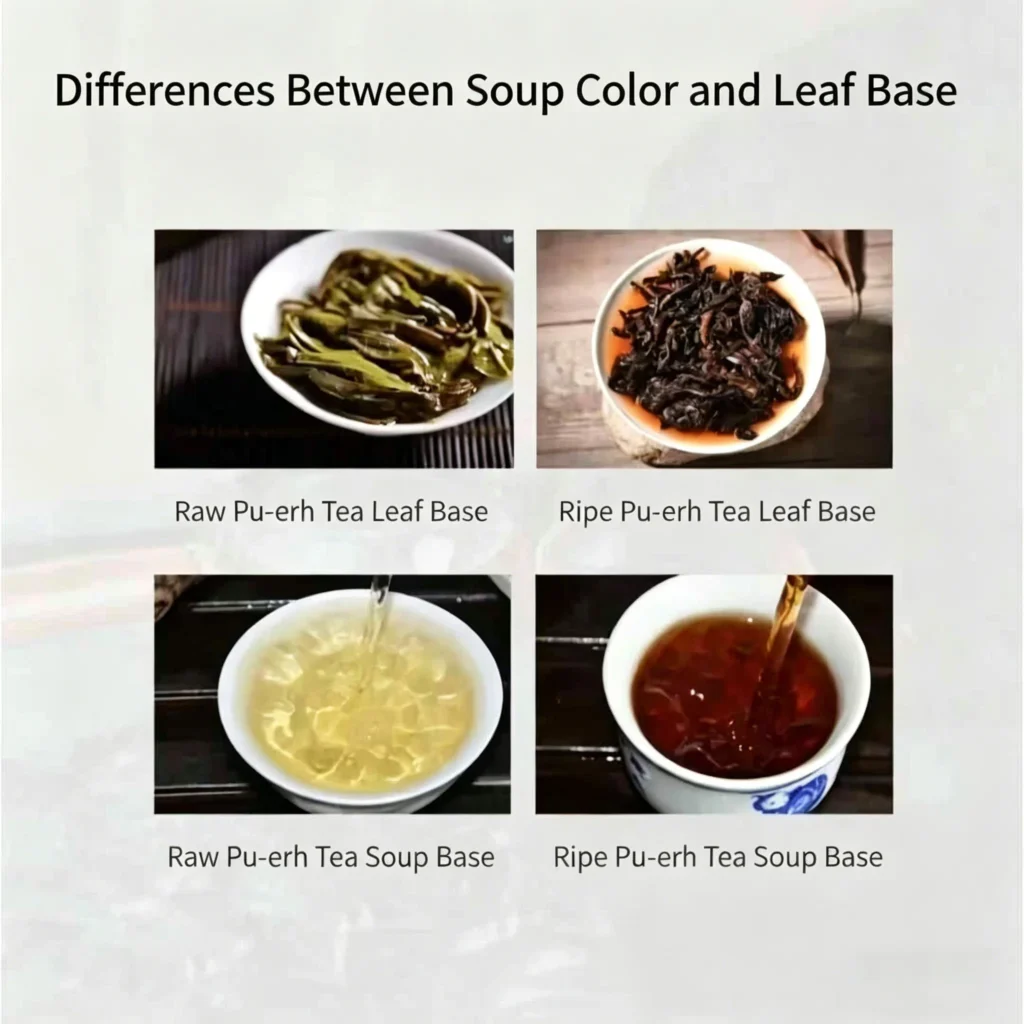
Taste: The Difference You Can Feel in Your Mouth
once served a raw and a ripe Pu-erh side by side to a friend who had never tried either. She took a sip of the raw and said, “This tastes like… green tea that’s angry.”
She wasn’t wrong.
Raw Pu-erh (new, under 5 years):
- Tea color: pale yellow to gold
- Taste: strong, sharp, astringent. Bitter upfront, then a wave of sweetness (hui gan) that lingers
- Smell: floral, fruity, sometimes grassy or smoky
- Body feel: “cha qi” — a physical sensation. Some people feel warmth, others feel a buzz. New sheng on an empty stomach can feel pretty rough.
Honestly, I didn’t get it at first. The first few cups felt brutal. I thought, “People pay money for this?” Then the sweetness came back. And I wanted another sip. That’s the hook.
Aged raw Pu-erh (10+ years):
- Tea color: orange to amber
- Taste: much smoother. Bitterness fades into the background. The sweetness becomes deeper, almost like dried fruit.
- Smell: camphor, medicinal herbs, old wood
- Body feel: warm, grounding. Still has cha qi, but gentler.
Ripe Pu-erh:
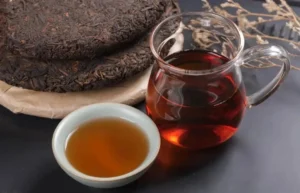
- Tea color: deep red, almost like red wine
- Taste: thick, creamy, sweet. Almost no bitterness. Some describe it as “broth-like” — it coats your mouth.
- Smell: earthy, sometimes like dates, bamboo leaves, or mushrooms. Lower-quality ripe can smell like wet basement (“dui wei”).
- Body feel: warm, relaxing. No jitters. Good for evening.
The difference is stark. A raw Pu-erh is a conversation — each steep reveals something new. A ripe Pu-erh is a hug — consistent, comforting, reliable.
Aging: What Actually Happens Over Time
This is where the “raw vs ripe” confusion runs deepest.
Raw Pu-erh is bought for aging. A good raw cake, stored properly (dry, dark, ventilated, no off-smells), can improve for 20–30 years. The flavor becomes smoother, deeper, more complex. Some collectors treat it like wine — buying young, holding for a decade, then drinking or selling.
But here’s the reality: most people don’t have proper storage conditions. In humid climates (like Guangzhou or Hong Kong), raw Pu-erh can mold or develop off-flavors. In dry climates (like Beijing), it ages very slowly. The “ideal” aging environment is hard to maintain.
Ripe Pu-erh is made to be drunk now. It will change slightly over 3–5 years — the “wet pile” smell fades, the flavor becomes rounder — but after that, it plateaus. A 20-year-old ripe Pu-erh is not dramatically better than a 5-year-old one.
That sounds nice, but in practice: if you buy ripe Pu-erh for aging, you’re wasting your money. Buy it for what it is today.
The One Mistake New Drinkers Make
The most common mistake: buying a cheap raw Pu-erh, expecting it to taste good.
Cheap raw Pu-erh is harsh, bitter, and astringent. It’s not “character” — it’s poor quality. Good raw Pu-erh, even when young, has balance. The bitterness is sharp but clean. The sweetness comes quickly. The tea feels alive.
Cheap ripe Pu-erh, on the other hand, can be drinkable. The fermentation process smooths out many flaws.
FAQ
Q: Can I drink raw Pu-erh every day?
Yes, if your stomach handles it. Many experienced drinkers do. But I would be careful: new raw Pu-erh on an empty stomach can cause “tea drunkenness” (dizziness, nausea). Eat something first.
Q: Does ripe Pu-erh have less caffeine?
Generally, yes — the fermentation process breaks down some caffeine. But the exact amount varies. If you’re sensitive, test it yourself. Some ripe Pu-erh still has enough caffeine to keep you awake.
Q: Which is better for weight loss?
Neither is a magic pill. Raw Pu-erh has more catechins, which may slightly boost metabolism. But the effect is small. Drink whichever you enjoy — consistency matters more.
Q: How do I store raw vs ripe Pu-erh?
Same conditions: dry, dark, ventilated, no strong smells. But store them separately — ripe’s earthy smell can transfer to raw. I learned this the hard way.
Q: Is ripe Pu-erh “fake” because it’s artificially fermented?
No. It’s a different process with a different purpose. Think of it like cheese: fresh cheese and aged cheese are both real cheese. Ripe Pu-erh is simply made for immediate drinking.
Q: Can I mix raw and ripe Pu-erh?
You can, but I wouldn’t recommend it. The flavors clash. Drink them separately to appreciate each.
Q: Which is better for gifting?
For a non-tea drinker: ripe. It’s easier to like. For a tea enthusiast: a good raw cake from a famous产区 (like Yiwu or Bulang). But only if you know what they like.
Q: How do I know if a Pu-erh is raw or ripe just by looking?
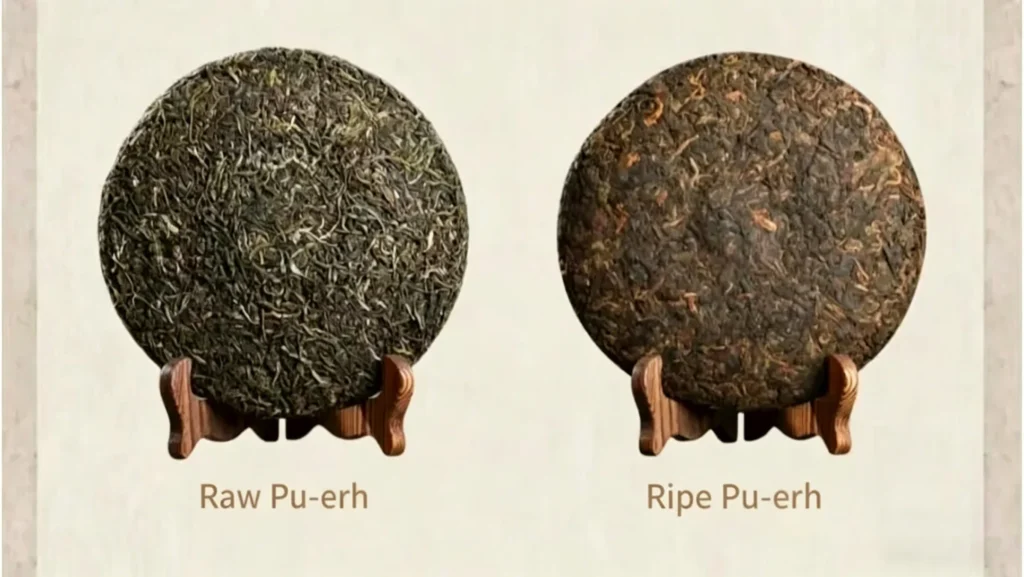
Raw is greenish-brown, with visible silver tips. Ripe is dark brown to black, with golden tips. But this takes practice. When in doubt, ask the seller.
Before You Decide, Understand This
Many people assume raw Pu-erh is “better” because it’s more expensive and more prized by collectors. That’s a misunderstanding. Raw and ripe serve different purposes. A good ripe Pu-erh — clean, sweet, thick — is harder to find than a mediocre raw one. Don’t let snobbery guide your choice.
→ Go deeper: [How to Choose Your First Pu-erh Cake (Without Getting Ripped Off)]
Where to Go Next
If you’re new to Pu-erh, start with a good ripe cake from a reputable producer. Drink it for a month. Learn how it changes from steep to steep. Then try a young raw Pu-erh. Compare them side by side. That’s how you’ll really understand the difference.
This is the kind of thing you understand differently once you’ve experienced it yourself.