
Choosing a Beijing teahouse is confusing. You have over 50 options, from touristy performance halls to silent Zen courtyards, and picking wrong means wasting ¥200 on a crowded, disappointing experience. This guide solves that by categorizing every major teahouse into five clear types. 👉 For a first-timer’s best all-around experience, book a weekday afternoon at a Hutong Artistic Hideout like 器生茶时 (Qi Sheng Cha Shi).
Quick Answer
- Best first-timer choice: A Hutong Artistic Hideout (e.g., 器生茶时) for authentic atmosphere without the tourist crowds.
- Time needed: Budget 1.5–2.5 hours for a proper sit-down tea service.
- What to avoid: Ordering “the house special” without asking the price first; some can exceed ¥300/pot.
- Skip if: You’re on a tight budget (under ¥80/person) or have less than an hour.
- Best for photography: 紫云轩茶事 (Zi Yun Xuan) for its dramatic, theatrical interiors.
- If you only do one thing: Go to a traditional tea house after 4 PM to avoid tour groups and see the space calm down.
Here’s a quick comparison:
| Name | Best For | Key Advantage | Price Range (per person) | Honest Drawback |
|---|---|---|---|---|
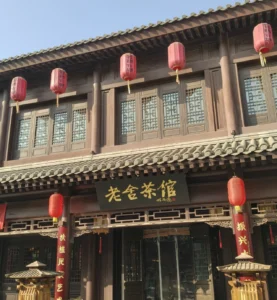
| 老舍茶馆 (Lao She Teahouse) | First-time tourists wanting a show | Guaranteed cultural performance (acrobatics, opera) | ¥180–280 (show + tea) | The tea is secondary; crowded, fixed schedule. |
| 器生茶时 (Qi Sheng Cha Shi) | Photography & quiet conversation | Stunning, minimalist glass-house design in a hutong | ¥120–180 | Must book 2-3 days in advance; no walk-ins. |
| 回 HUI (Temple Complex) | Unique historical ambiance | Set within a 600-year-old temple (Zhizhusi) | ¥150–220 | Can feel more like a trendy gallery than a focused tea space. |
| 张一元茶馆 (Zhang Yiyuan) | Buying quality tea to take home | Trusted, century-old brand; taste before you buy | ¥80–150 (tasting) | The drinking area is functional, not a “experience.” |
| 颐和园·颐茶 (Yi Tea, Summer Palace) | Visitors to the Summer Palace | Lakeside views inside the palace grounds | ¥90–130 | You pay for the location; tea selection is basic. |
Who This Teahouse Guide Is For / NOT For
✓ Works well for: First-time visitors wanting to avoid tourist traps. Travelers with 2+ hours to relax. Photographers seeking beautiful interiors. Anyone wanting to buy quality tea as a gift.
✗ NOT for: Travelers on a sub-¥50 budget. Those needing a quick 30-minute coffee-shop-style drink. People who dislike sitting on floor cushions or in quiet spaces.
👉 Most visitors only try one. The best trips include at least two very different styles.
How Much Does Tea Cost in Beijing?
- Street tea: ¥2–5
- Park teahouse: ¥10–50
- Hutong tasting: ¥80–200
- Show teahouse: ¥200+
The Decision: Which Beijing Teahouse Should You Choose?
The friction point is that Beijing’s tea scene isn’t one thing—it’s five separate worlds that serve completely different purposes. Picking the wrong type wastes your afternoon.
IF you are a first-time visitor and want a “cultural experience”…
THEN go to 老舍茶馆 (Lao She Teahouse) for the 7:30 PM performance package. You’ll see a sampler of opera, acrobatics, and tea art. It’s the cultural equivalent of a theme park—predictable, packaged, but undeniably Beijing. For most first-timers, this is the right call for a one-time spectacle.
IF you have a ¥100–180 budget and want authentic, quiet atmosphere…
THEN book a Hutong Artistic Hideout like 器生茶时 (Qi Sheng Cha Shi) or 回茶馆 (Hui Teahouse). These are independent, design-focused spaces where the owner often serves you. The east hutong alley behind Yonghegong (Lama Temple) has the highest concentration of these—walk 8 minutes from the temple’s west exit to find them.
IF you are visiting a major park or temple and want a scenic break…
THEN plan your route to end near the park’s teahouse. 颐和园·颐茶 (Summer Palace) is 5 minutes from the Marble Boat. 柳荫公园·馥园 (Fuyuan, Liuyin Park) is on the west lake shore. The key is to go after your main sightseeing, around 3–4 PM, when you need the rest and the light is best.
IF you are a serious tea drinker or want to buy leaves to take home…
THEN head to a Traditional Old Tea House like 张一元 (Zhang Yiyuan) on Dashilan Street or 吴裕泰 (Wu Yu Tai). Skip the casual drinking area and ask for a tasting (pin cha) at the counter. You can sample 3–4 types of famous Jasmine or Oolong for ¥50–80, and the staff will explain the grades. This is where locals actually buy tea.
IF you are with a group or want a “vibe” over serious tea…
THEN choose a Modern Tea Bar like 煮叶 (Zhu Ye) in Sanlitun or Tea by Tea. These operate like coffee shops, with comfortable seating, WiFi, and creative iced tea drinks. It’s tea for people who don’t want ceremony—perfect for a 45-minute meet-up.
The 5 Types of Beijing Teahouses, Explained
We map the entire scene so you know exactly what you’re walking into.
1. Traditional Old Tea Houses (For Culture & Commerce)
These are where to experience (or observe) classic Beijing tea commerce — they are functional, historical, and often loud. The two giants are Zhang Yiyuan and Wu Yu Tai, both over 100 years old and located on the tourist-heavy Dashilan Street. Their key advantage is authenticity and quality assurance for tea purchases. HONEST TAKE: The upstairs “tea rooms” are often cramped, brightly lit, and not designed for leisurely lounging. You go here to buy tea, not to spend an afternoon.
- 老舍茶馆 (Lao She Teahouse) is the performance variant. The 90-minute show is a competent survey of Chinese performing arts. The east entrance on Qianmen Street is for show tickets; the west side is for walk-in tea only — mixing them up costs 20 minutes.
Verdict: For buying tea or seeing a show, these are unmatched. For a relaxing drink, look elsewhere.
2. Zen & Courtyard Tea Spaces (For Peace & Quiet)
These teahouses prioritize tranquility, often set in renovated siheyuan (courtyard homes) with minimalist decor. Think low tables, floor cushions, soft music, and servers who speak in hushed tones. 京华茶社 (Jinghua Tea Club) near Ditan Park is a prime example. HONEST TAKE: The silence can be intense and the pace slow; this isn’t for a lively chat with friends.
- 紫云轩茶事 (Zi Yun Xuan) is the theatrical extreme, with black swans wandering through a cavernous, dark space. It feels more like an art installation. Most visitors go for the 2 PM “afternoon tea” set (¥220), but the 11 AM opening slot is 70% less crowded for the same experience.
Verdict: If your goal is to read, write, or genuinely decompress for two hours, this is your category.
3. Artistic Hutong Hideouts (For Atmosphere & Design)
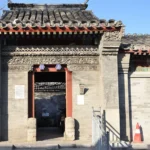
This is the sweet spot for most travelers: independent, stylish teahouses hidden in hutongs, run by passionate owners. They blend traditional tea with contemporary aesthetics. 器生茶时 (Qi Sheng Cha Shi) on Dongsi Beidajie is the poster child, with its iconic glass cube. HONEST TAKE: Their popularity is their downfall; you must book via WeChat or phone 2–3 days in advance, especially for weekends.
- 回 HUI in the 600-year-old Zhizhusi temple complex is unique. The space transforms at 8 PM from a teahouse to a wine bar with live music — the same historic setting, completely different atmosphere.
Verdict: For the best blend of authentic location, quality tea, and beautiful design, this category wins. Plan and book ahead.
4. Nature-Integrated Tea Rooms (For Scenery)
These are extensions of Beijing’s parks and gardens, where the view is part of the service. The tea is usually decent but not exceptional. The key system loophole: You often need to pay the park entrance fee (e.g., ¥10 for Liuyin Park, ¥30 for Summer Palace) on top of the tea price.
- 柳荫公园·馥园 (Fuyuan) is inside Liuyin Park. Enter from the park’s west gate — it’s a 3-minute walk to the teahouse. The south gate adds 12 minutes of walking.
Verdict: Only choose this if you are already visiting the park. Don’t make a special trip across town just for the tea.
5. Modern Tea Bars (For Convenience & Innovation)
Think “tea as a contemporary beverage” — fast service, creative menus, and a cafe vibe. 煮叶 (Zhu Ye) has several branches (Taikoo Li, Wangfujing) and is the most reliable. HONEST TAKE: This is where you go for a great drink, not for a tea experience. It’s perfect for a pause between sights.
- Tea by Tea in Sanlitun experiments with tea cocktails and tea-infused desserts. Their weekend workshops (e.g., tea blending) often have last-minute spots if you call at 11 AM that day.
Verdict: When time, comfort, or a craving for iced rose oolong is your priority, this is the answer.
Best Time to Visit — and When to Avoid It
Teahouse crowds and vibes shift dramatically with the season and time of day.
- Spring (Apr–May) & Autumn (Sep–Oct): Peak season. Courtyard and park teahouses are ideal. Book any hutong or courtyard teahouse at least 3 days in advance. Weekend afternoons are packed.
- Summer (Jun–Aug): Hot and humid. Prioritize air-conditioned modern tea bars or park teahouses with shade. Avoid glasshouses like 器生茶时 in the midday sun—they become greenhouses.
- Winter (Nov–Mar): Low season for tourists, high season for “围炉煮茶” (weilu zhucha), the trendy “stove-side tea boiling” experience. Many hutong teahouses offer this. These slots book out a week in advance.
- Time Arbitrage: The single best time to visit any sit-down teahouse is weekday, 2–4 PM. Morning slots (10 AM–12 PM) are often reserved for private events or cleaning. The post-lunch lull is real, quiet, and staff are more attentive.
The "Tea" That Isn't Tea: Beijing's Snack Culture
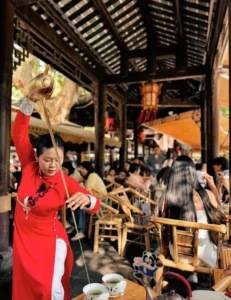
Beijing tea culture has a delicious, quirky side: the “teas” that contain no tea leaves. These are hearty, often savory snacks that fueled a working city. Miancha (面茶) is a warm porridge of millet flour, topped with a double layer of sesame paste and sprinkled with salt and Sichuan pepper. The proper way to drink it is to turn the bowl with your hands, sipping from the edge to get all the flavors. You can find a famous, no-frills stall in Daxing Hutong (交道口南大兴胡同7号) for about ¥5. Chatang (茶汤) is a show in itself, made by a master pouring boiling water from a dramatic long-spouted copper kettle into a bowl of millet flour, creating a thick, sweet paste. Tea Soup Li (茶汤李) is the classic spot to try the “inverted bowl” trick. Youcha (油茶) is a fried flour paste often mixed with nuts, and Xingrencha (杏仁茶) is a sweet, almond-flavored hot drink. These are best sampled at traditional snack shops like Huguo Temple Snacks or Juer Renjia near Nanluoguxiang.
These snacks are technically not tea, but they’re an essential part of Beijing’s everyday tea culture.
Practical Info For Key Teahouses
老舍茶馆 (Lao She Teahouse)
- ADDRESS: 3 Qianmen West Street, Xicheng District.
- TRANSPORT: Metro Line 2, Qianmen Station, Exit C. 5-min walk south.
- PRICE: Show + tea: ¥180–280. Walk-in tea only: ¥80–150/pot.
- HOURS: 10:00 AM–10:30 PM. Shows at 2:30 PM & 7:30 PM.
- BOOKING: Show tickets on Ctrip or Meituan. Book 1–2 days ahead.
器生茶时 (Qi Sheng Cha Shi)
- ADDRESS: 40 Dongsi Beidajie, Dongcheng District (in a hutong alley).
- TRANSPORT: Metro Line 5, Zhangzizhonglu Station, Exit D. 8-min walk west.
- PRICE: ¥120–180 per person for a tea set.
- HOURS: 11:00 AM–8:00 PM, closed Mondays.
- BOOKING: Mandatory. Contact via WeChat (search public account) or phone 2–3 days in advance.
张一元茶馆 (Dashilan Branch)
- ADDRESS: 86 Dashilan Street, Xicheng District.
- TRANSPORT: Metro Line 2, Qianmen Station, Exit C or B. 7-min walk.
- PRICE: Tea tasting at counter: ¥50–100. Sit-down service upstairs: ¥80–150.
- HOURS: 9:00 AM–9:00 PM.
- BOOKING: Walk-in only for tasting. Upstairs tea room first-come, first-served.
柳荫公园·馥园 (Fuyuan Teahouse)
- ADDRESS: Inside Liuyin Park, near west shore, Xicheng District.
- TRANSPORT: Metro Line 8, Andeli Beijie Station, Exit B1. 10-min walk to park WEST gate.
- PRICE: Park entry: ¥2. Tea sets: ¥90–160.
- HOURS: Park 6:00 AM–9:00 PM. Teahouse 10:00 AM–7:00 PM.
- BOOKING: Call for weekend afternoons. Weekdays are fine.
- Many of the best teahouses are hidden in hutongs — this Beijing hutong walking guide helps you explore the area beyond the main streets.
A 1-Day Beijing Tea Culture Itinerary
If you only have one day, this is the fastest way to experience different sides of Beijing teahouses — from quiet courtyards to historic tea halls.
| Time | Place | What to Do | Budget |
|---|---|---|---|
| 09:30 | Yonghegong (Lama Temple) | Visit the temple, soak in the morning atmosphere. | ¥25 |
| 11:00 | Chawet Teahouse | Short walk to the hutong for a relaxed tea tasting session. | ¥50-100 |
| 13:00 | Lunch in Wudaoying Hutong | Explore nearby hutongs for a casual lunch. | ¥40-80 |
| 15:00 | Subway to Qianmen | Line 2 south to the historic commercial street. | ¥4 |
| 15:30 | Lao She Teahouse | Have the 2-cent tea, watch a snippet of a show, explore the space. | ¥0.02+ |
| 17:00 | Qianmen Street Snacks | Try a bowl of Chatang or Xingrencha from a street vendor. | ¥10-20 |
This is the standard tasting route. Two ways to take it further:
→ PandaTao Beijing Guide PDF: maps, booking links, offline itinerary — pandatao.me
→ Custom itinerary: built around your pace, style, and dates — pandatao.me@gmail.com
What Most Guides Won't Tell You
❌ Mistake: Going to a famous teahouse at peak tea time (1–3 PM weekend).
✅ Truth: The staff are overwhelmed, water refills slow, and the ambiance is rushed. Go at 4 PM. You’ll get the same service, the same light, and a much calmer environment.
❌ Mistake: Assuming “unlimited hot water” means you can brew 10 pots from one serving of leaves.
✅ Truth: Good tea leaves produce flavor for 3–5 steeps max. After that, you’re just drinking hot water. A skilled server will tell you when the leaves are “done” and may offer to change them (for an added fee).
The “Bowl Lid” Signal: In some traditional spaces, placing the lid of your gaiwan (lidded bowl) askew on top is a silent request for a hot water refill. Placing it neatly closed means you’re still savoring the current brew.
Tea is Not Coffee: The service rhythm is fundamentally different. Don’t expect your tea to arrive in 5 minutes. The preparation, warming of vessels, and first steeping are part of the experience. Budget the time for it.
FAQ
Q: How long does a typical teahouse visit take?
A: A proper sit-down tea service takes 1.5 to 2.5 hours — this includes the server’s initial presentation, multiple steepings, and time to relax. Rushing through in under an hour defeats the purpose.
Q: Is it worth going to a teahouse if I only have 2 hours in Beijing?
A: No. With only 2 hours total in the city, a teahouse is a poor use of time. If you have a 2-hour break between sights, a modern tea bar like 煮叶 is a better, faster choice.
Q: What’s the dress code?
A: There is no formal code, but for courtyard and Zen spaces, avoid overly loud behavior. You’ll be sitting on floor cushions or low stools, so comfortable clothing is wise.
Q: Morning vs. afternoon for a teahouse visit?
A: Afternoon is almost always better. Light is softer, the post-lunch calm has set in, and you’ve already done some sightseeing. Most teahouses don’t hit their stride until after 11 AM.
Q: Can I go alone?
A: Absolutely. In fact, the Zen and Artistic hutong teahouses are excellent for solo visitors. Bring a book or just watch the light move across the courtyard.
Q: Do I need to speak Chinese?
A: In Modern Tea Bars and major tourist spots (Lao She), basic English works. In Artistic Hutong Hideouts, staff often speak some English. In traditional tea houses for buying, use a translation app for specific tea names.
Questions You Might Still Have
Finding a specific hutong teahouse is the biggest logistical hurdle — maps often drop pins at the hutong entrance, not the door. The east side of Dongsi Beidajie, between lines 5 and 6, contains over a dozen small teahouses within a 5-minute walk. Look for discreet wooden signs.
Tipping is not expected in any teahouse in China. The price you see is the price you pay.
The quality of tea varies wildly. As a rule, if a pot of tea is under ¥60, it’s likely a low-grade, mass-produced leaf. The ¥100–180 range is where you find drinkable, interesting teas served with care.