
You’re staring at a pu-erh cake, a tea needle in one hand, and seven different articles telling you seven different things. One says 85°C. Another says boiling. A third says “it depends” — and then explains nothing. This article gives you the 7 rules that actually work, in the order they matter.
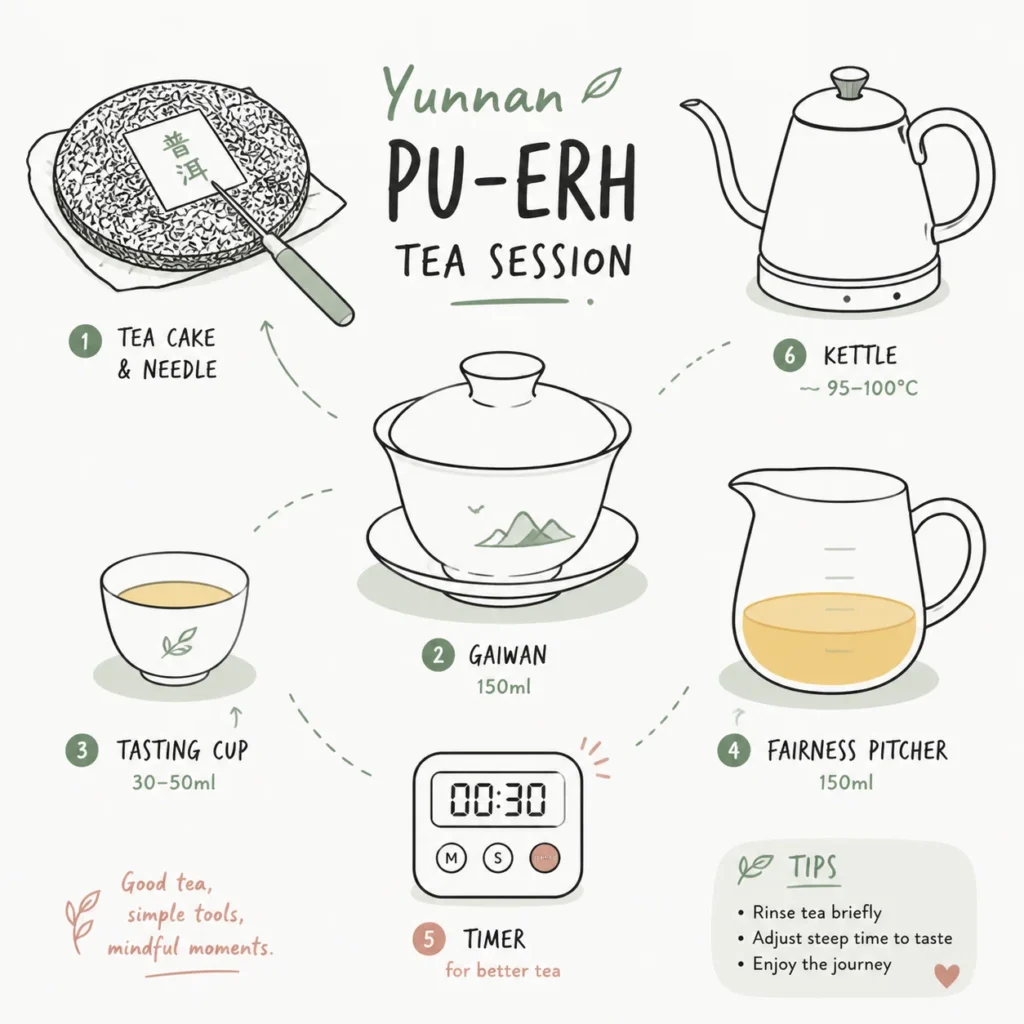
👉 For your first pu-erh session: use a 100ml gaiwan, 5g of tea, boiling water for shou (ripe), 93°C for sheng (raw), and start with 10-second steeps.
Quick Answer
- Best choice for beginners: Start with a ripe pu-erh (shou) — it’s forgiving, hard to ruin, and tastes good even when you get it wrong.
- Time needed: 15–20 minutes for a full session (5–8 steeps).
- What to avoid: Using boiling water on young sheng — it turns bitter in seconds.
- Skip if: You only have 5 minutes and a mug — pu-erh needs multiple short steeps to shine.
- Best for: Anyone who wants a tea that changes across a session — not just one flat flavor.
- Default safest choice: 100ml gaiwan, 5g shou pu-erh, boiling water, 10-second steeps, increase by 5 seconds each round.
Quick Comparison: Brewing Methods at a Glance
| Method | Best For | Key Advantage | Price Range | Honest Drawback |
|---|---|---|---|---|
| Gaiwan (100ml) | Beginners, sheng pu-erh | Fast pour, see the leaves, control timing | ¥30–150 | Small capacity, need to pour carefully |
| Yixing teapot (120ml) | Aged sheng, shou pu-erh | Absorbs off-flavors, keeps heat, thickens mouthfeel | ¥200–2000+ | Expensive, needs dedicated use per tea type |
| Thermos / vacuum flask | Shou pu-erh on the go | Set-and-forget, consistent results | ¥50–200 | Can over-extract, no session progression |
| Ceramic teapot | All pu-erh | Neutral flavor, good heat retention | ¥80–300 | Less character than Yixing |
| Glass gaiwan | Visual learners | See the liquor color change | ¥20–60 | Thin glass cools fast |
Who This Is For / NOT For
✓ Works well for:
- First-time pu-erh drinkers who want a clear, repeatable method
- Anyone who’s tried pu-erh and got a bitter, muddy, or flat cup
- Tea drinkers who want to understand why brewing choices matter — not just follow steps
✗ NOT for:
- People who only drink tea from tea bags and don’t want to learn
- Anyone looking for a “one perfect recipe” — pu-erh changes as you steep it
- If you hate measuring or timing things — this tea rewards attention
The 7 Rules That Actually Work
1. Water Temperature: The Single Biggest Mistake
For shou (ripe) pu-erh: use boiling water (100°C). Always. Shou is fermented — it needs high heat to open up. Low temperature gives you a flat, muddy cup with no sweetness.
For sheng (raw) pu-erh: it depends on age.
- Young sheng (0–5 years): 90–95°C. Boiling water extracts too much bitterness too fast.
- Aged sheng (10+ years): 95–100°C. The bitterness has mellowed — high heat wakes up the aged character.
China Reality: In Yunnan tea houses, nobody explains this — which is why first-timers get it wrong. They use the same water for everything and wonder why young sheng tastes like aspirin.
HONEST TAKE: If you only have one kettle, default to 95°C. It’s not perfect for either, but it won’t ruin either one.
Strategy Insight: Why temperature matters more here than with other teas. Pu-erh is compressed and aged — the leaves need heat to unfurl. But young sheng is still “alive” with active enzymes. Too much heat and you extract bitter compounds before the sweet ones arrive. Too little and the leaves never open. This is the hidden trade-off most guides never mention.
2. Water Quality: Don’t Use Tap Water
Pu-erh is more sensitive to water than almost any other tea. The minerals in tap water — especially chlorine and calcium — flatten the flavor and create a muddy liquor.
What works:
- Filtered water (Brita or similar) — good enough for daily drinking
- Spring water — noticeably better, especially for aged sheng
- Purified bottled water — neutral and reliable
What to avoid:
- Unfiltered tap water — the chlorine kills the tea’s aroma
- Distilled water — too flat, no body
Verdict: If you’re using tap water and getting a bad cup, try filtered water before changing anything else. It makes more difference than the teapot.
3. The Right Tool: Gaiwan vs. Yixing
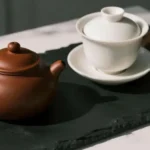
For beginners: gaiwan, every time. It’s cheap, easy to clean, and lets you see the leaves and liquor. You can’t overshoot timing because you pour instantly.
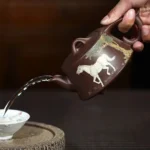
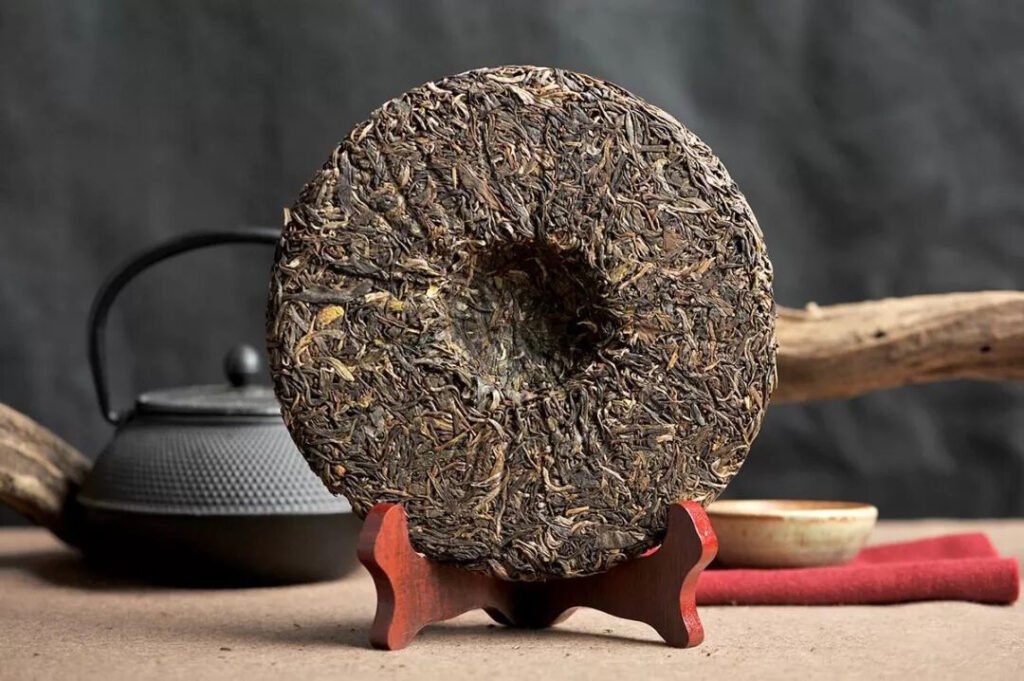
For experienced drinkers: Yixing teapot for shou and aged sheng. The clay absorbs off-flavors (the “wet pile” smell in shou) and keeps heat longer, which thickens the mouthfeel.
What locals actually do: Most serious pu-erh drinkers in Yunnan own both. Gaiwan for sheng (to taste the purity), Yixing for shou (to round out the edges). They don’t use one for everything.
Verdict: Start with a gaiwan. If you fall in love with pu-erh, add a Yixing later.
4. Leaf-to-Water Ratio: The Most Common Beginner Mistake
The standard ratio: 5g of tea per 100ml of water.
Most beginners use too much leaf — 7–8g in a 100ml gaiwan — and get a bitter, overpowering cup. Pu-erh is dense. A little goes a long way.
Adjustments:
- Shou pu-erh: 5g/100ml is a good starting point. Increase to 6g if you want more body.
- Young sheng: 4–5g/100ml. Less is more — you can always add leaf next time.
- Aged sheng: 5g/100ml. The leaves are more forgiving.
HONEST TAKE: If you’re using a scale, start at 4g and work up. Most people prefer 4–5g but start at 7g because “that’s what the guide said.” The guide was wrong for your palate.
5. The Wash (Rinse): Don’t Skip It, Don’t Overdo It
For shou: one rinse, 10 seconds, boiling water. This removes dust from the fermentation process and wakes up the leaves.
For young sheng: one quick rinse, 5 seconds, 95°C water. Just enough to open the leaves — not enough to extract bitterness.
For aged sheng: two rinses, 10 seconds each, boiling water. Older tea needs more time to wake up.
What tourists misunderstand: The rinse isn’t about “washing” the tea. It’s about warming the leaves so they release flavor in the first real steep. If you skip it, your first cup will be weak.
6. Steeping Times: The Progression
First 3 steeps: 10 seconds each.
- Shou: 10 seconds, boiling
- Young sheng: 10 seconds, 93°C
- Aged sheng: 10 seconds, 95°C
Steeps 4–6: add 5 seconds each round.
- Steep 4: 15 seconds
- Steep 5: 20 seconds
- Steep 6: 25 seconds
Steeps 7+: add 10–15 seconds each round.
- By steep 8, you’re at 40–50 seconds
- By steep 10, you can push to 1 minute
The one rule: Pour out every drop. Don’t leave water sitting on the leaves — it over-extracts and ruins the next steep.
The first time I brewed pu-erh, I followed a guide that said “boiling water, 10 seconds” — and got a cup of liquid asphalt. The problem wasn’t the time. It was the leaf amount. I used 8g in a 100ml gaiwan. The ratio matters more than the seconds.
7. When to Stop: Signs Your Tea Is Done
Pu-erh is unusually forgiving — good pu-erh can go 10–15 steeps. But there’s a point where it’s not worth continuing.
Stop when:
- The liquor turns pale and watery
- The flavor becomes flat (no sweetness, no bitterness — just “hot water”)
- The leaves are fully open and feel soft, not firm
For shou: You’ll usually get 8–10 good steeps before it drops off.
For sheng: 10–15 steeps is normal for good material.
For aged sheng: 12–18 steeps, if you’re patient.
Verdict: Don’t force it. When the tea stops giving, thank it and start fresh.
Decision Section: Which Pu-erh Should You Brew First?
IF you’re a complete beginner → Start with shou pu-erh. It’s forgiving, hard to ruin, and tastes good even when you get the timing wrong. Use a gaiwan, 5g, boiling water, 10-second steeps.
IF you want to taste “the real pu-erh” → Buy a good young sheng from a reputable producer (¥300–600 for 357g). Brew at 93°C, 5g/100ml, 10-second steeps. This is what pu-erh enthusiasts drink.
IF you have limited time (under 15 minutes) → Don’t brew pu-erh. It needs multiple steeps to show its range. Make a cup of oolong or black tea instead. Pu-erh rewards patience.
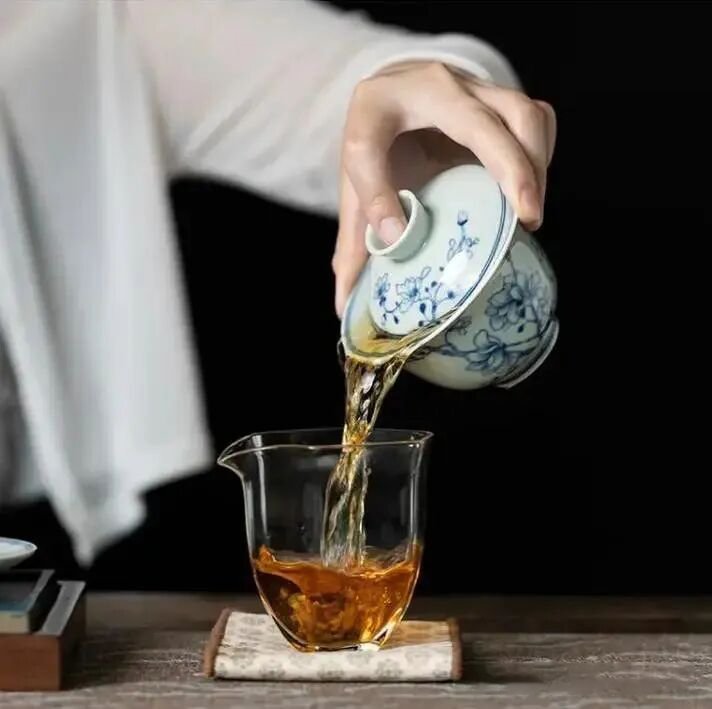
IF you’re brewing for a group (4+ people) → Use a larger vessel (200ml+). Keep the ratio at 5g/100ml. Increase steeping time by 5 seconds to account for the larger volume. Pour into a fairness pitcher before serving.
IF you want the most convenient method → Thermos brew shou pu-erh. 3g tea to 500ml boiling water. Wait 15 minutes. Pour and drink. No gaiwan, no timing, no mess. It won’t be as nuanced, but it’s reliable.
Friction Point: The hardest part of pu-erh is the first session — you don’t know what “right” tastes like yet. The solution: brew the same tea twice in one day. Compare. Adjust. You’ll learn more in one afternoon than from ten articles.
Micro Decision Layer:
- “Which is less tiring per day?” Shou — it’s smooth, comforting, and doesn’t demand your full attention.
- “Which if I hate planning?” Thermos brew shou — set it and forget it.
- “Which causes less friction?” Gaiwan + shou — the easiest combination to get right on the first try.
What Most Guides Won't Tell You
Truth 1: The “right” temperature changes as you steep.
Most guides give you one temperature. But your first steep at 93°C might be perfect, and your fifth steep at 93°C might be weak. As the leaves open, they extract faster — so you can actually lower the temperature slightly after steep 4. Or keep it the same and shorten the time. The point: don’t treat temperature as fixed.
Truth 2: The rinse water should be hotter than the brewing water.
This sounds counterintuitive, but it works. Use boiling water for the rinse (even for young sheng), then drop to 93°C for the first real steep. The hot rinse opens the leaves faster, and the cooler brew prevents bitterness. Try it.
Truth 3: Most pu-erh is over-brewed, not under-brewed.
The #1 complaint from beginners is “too bitter.” The fix is almost always less leaf or shorter time — not lower temperature. If your pu-erh is bitter, try 4g instead of 5g before changing anything else.
Truth 4: The best pu-erh doesn’t need “perfect” technique.
Good pu-erh is forgiving. If you’re struggling with technique, the problem might be the tea itself. Cheap shou (under ¥50/cake) often tastes muddy no matter what you do. Cheap sheng is harsh. Spend a little more on a reputable producer — it makes technique easier, not harder.
⚠️ The tourist mistake: Using the same brewing parameters for every pu-erh. Sheng and shou are different animals. Treating them the same gives you two bad cups instead of one good one.
🎯 The smarter move: Buy one decent shou cake and one decent sheng cake. Brew them side by side. The contrast teaches you more than any guide can.
FAQ
Q1: How long should I steep pu-erh for the first time?
10 seconds for the first steep, regardless of sheng or shou. Increase by 5 seconds each subsequent steep. This gives you a progression from light to strong.
Q2: Can I brew pu-erh in a mug like regular tea?
You can, but it won’t taste the same. Pu-erh needs multiple short steeps to show its range. A single long steep (3–5 minutes) in a mug gives you a flat, one-dimensional cup. If you must mug-brew, use 3g of shou and steep for 3 minutes — it’s drinkable but not great.
Q3: Why does my pu-erh taste like dirt?
Two likely reasons: (1) You’re using cheap shou that wasn’t well-processed — it has a “wet pile” smell that never goes away. (2) You’re not rinsing enough — try two rinses of 10 seconds each with boiling water. If it still tastes like dirt, the tea is the problem.
Q4: Is it worth buying a Yixing teapot for pu-erh?
Only if you drink pu-erh regularly (3+ times per week). For occasional drinkers, a gaiwan is better — cheaper, easier, and more versatile. Yixing teapots also need to be dedicated to one tea type, which is impractical for most beginners.
Q5: Morning vs afternoon — does it matter for pu-erh?
Shou pu-erh is gentle on the stomach and works well in the morning. Young sheng has more caffeine and can be stimulating — better for afternoon sessions. Aged sheng is somewhere in between. If you’re caffeine-sensitive, avoid pu-erh after 4pm.
Q6: How do I know if my pu-erh is good quality?
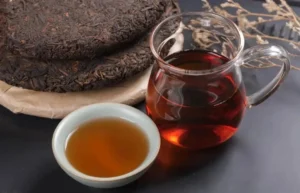
Look for: clean, even leaves (not broken or dusty), a pleasant aroma (no mold, no chemical smell), and a liquor that’s clear (not muddy). For shou, the liquor should be deep red and translucent. For sheng, it should be golden to amber and bright. If it’s murky, the tea or the brewing is wrong.
Q7: Can I re-steep pu-erh the next day?
Technically yes, but it won’t taste good. The leaves oxidize overnight and lose volatile aromatics. Brew fresh. Pu-erh is cheap enough per session (¥2–5) that re-steeping isn’t worth it.
Questions You Might Still Have
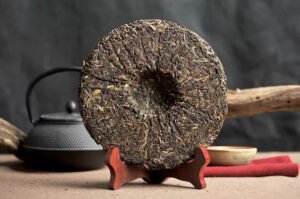
How do I store opened pu-erh cakes? Keep them in a cool, dark, dry place with some airflow — not airtight, not in the fridge. A paper bag or a clay jar works. Avoid plastic bags (they trap moisture) and direct sunlight (it kills the flavor). If you live in a humid climate, check the cake monthly for mold.
What’s the difference between “dry storage” and “wet storage” pu-erh? Dry storage means the tea aged in a low-humidity environment — slower aging, cleaner flavor, more acidity. Wet storage means higher humidity — faster aging, darker liquor, sometimes a “storage” taste. Most serious drinkers prefer dry storage for purity, but some aged teas from Hong Kong or Taiwan (wet storage) have a unique character that’s prized.
Can I brew pu-erh with a French press? Yes, and it works surprisingly well. Use 5g of shou, boiling water, steep 3 minutes, press and pour. It’s not as nuanced as gaiwan brewing, but it’s much better than a mug. The French press filters out the fine particles that make mug-brewed pu-erh muddy.
What to Do Next
- Still planning your first session? → [Pu-erh for Beginners: What to Buy First](link)
- Want to go deeper on sheng vs. shou? → [The Real Difference Between Raw and Ripe Pu-erh](link)
- Ready for a done-for-you approach? → [PandaTao’s Pu-erh Starter Collection](link) — curated teas + brewing guide, so you don’t have to guess
The Cost of Not Having a Plan
Most first-time pu-erh drinkers waste 3–5 sessions on avoidable mistakes — wrong temperature, wrong leaf amount, wrong timing. That’s ¥100–200 of tea that could have been great, turned into “meh.” And more importantly, it’s the lost chance to fall in love with a tea that rewards patience.
Add Your Heading Text
Pu-erh is a tea you understand differently once you’ve brewed it yourself. The first time you get a perfect steep — sweet, smooth, with a long finish — you’ll know why people dedicate decades to it. If you’re curious to explore, PandaTao’s pu-erh collection starts with teas that are forgiving enough for beginners but good enough to grow with. Not a sales pitch — just a place to start.